There are so many "creative inspiration" books out there, that I sometimes wonder if they don't perhaps stifle the creative process to an extent. How can looking at a book that a million other people own encourage you to have an original thought? In fact, is there even such a thing as an original thought? (I'm sure I'm not the first person to wonder that!) Even so, if you are looking to buy a book to inspire you, I find Alan Fletcher's books the best. Everybody by now is probably familiar with The Art of Looking Sideways, which surely must be his best selling book, but I also find the more recent Picturing and Poeting to be a good resource.
As it says on the cover "This book turns words into pictures, finds poetry in rubbish, and discovers the unlikely in the commonplace. Alan Fletcher stands ideas on their heads to present a kaleidoscope of sketches, images, doodles, and many other twists and turns from his unpredictable imagination." This book is largely compiled from Alan Fletcher's travel diaries. It contains sketches of friends, witty anecdotes and thought provoking quotes about, well, just about everything.
This, as everybody knows, is the Leaning Tower of Pisa. Construction began in 1173 and, as everybody knows, the tower was not structurally sound enough to keep itself upright for long. The reason I'm mentioning this is because this build was one of the biggest architectural errors in the history of time, yet now it is a monumental landmark that thousands of people visit on a daily basis. I think this is a reminder that you don't always have to get everything perfect all the time to be a success. None the less, I think the architect was probably fired!
Lets be honest, it's probably going to be something rubbish and disappointing, but they're not letting on either way. And by 'they' I mean Proctor and Gamble, who are responsible for this teaser campaign that's all over the TV at the moment. This campaign has led me to wonder how successful teaser adverts can be. Is anybody interested in what this product is going to be and whether it's going to change the world? Did anybody bother to visit the website? (www.coldisthenewhot.com, it's nothing special)
My last post about the Burj Dubai got me thinking about how in effect, most places could be considered as a brand. For example, if London was a brand what would be the brand essence? Would it be the architecture? The people? The museums?
Well apparently I'm not the only person thinking about this. As Creative Review state: "Watermill London has created this new marketing campaign for Camden Town, which aims to reassert the borough as a destination for international business and shopping, and put paid to the impression that it has “burnt down”. "
One of the key things that Camden is known for is the market, which has now burnt down and subsequently closed. Because of this Camden are keen to promote that they have much more to offer. This campaign reiterates a point raised by Wally Ollin's book On Brand - that branding is definitely not just for products anymore.
The Burj Dubai is a building currently under construction in the new 2km development known as "Downtown Dubai". It is due for completion in 2009 and is already the tallest man-made structure in the world. Dubai has recently emerged as a top holiday destination and is a very up-and-coming and wealthy country. I think this building is a way for Dubai to prove themselves as serious players in the financial world - to show of their wealth and promote what could almost be considered as 'Dubai the brand'.
The Museum of Brands, Packaging and Advertising in Notting Hill is currently exhibiting retro sweet packaging from the sixties. It's a really useful exhibition for anyone who is interested in branding - I think it's fascinating to see how the identities have developed over the years, while still being instantly recognisable. Not quite a trip down memory lane for us 80s kids, but well worth a visit if you find yourself floating around London (it's £3.50 for student entry).
For anybody who cares about getting typography right (and that should be all designers), the book Type and Typography By Phil Baines and Andrew Haslam is a must. It is an essential handbook explaining the whos whys and hows of typography with plenty of illustrated examples and diagrams.
As it says on the cover: "This book offers an overview of the bewildering variety of typefaces available, and a practical guide to using type as a meaningful element of design." It covers everything from the history of typography to how to use type in motion. I just wish I had known about this book in the first year for the typography project!
China boasts some truly innovative architecture, including the gravity defying CCTV (Central Chinese Television) building (above), which has an irregular "diagrid" system one the outside. If you look closely at this criss-cross system it looks, well, wrong - it looks to me like the builders couldn't be bothered to do it properly! It is, however, this odd looking system which balances all the forces out and therefore holds the building together. As well as this CCTV building, China is also home to the Shanghai World Finance Centre and the National Grand Theatre in Beijing (below). These stunning looking buildings show that there really are no limitations within design. If you can picture it, chances are it can be done - where there's a will, there's a way.
I know everybody's seen the Economist adverts before but I still think this one's so clever. The Economist have such strong branding that they wouldn't even need to put their name on this advert and everyone would still know what it is for. I think interactive billboards are definitely where advertising is headed, especially when there's so many things vying for our attention, and this is a perfect example of how it's done well.
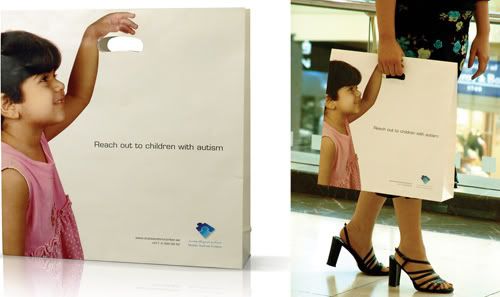
"Reach out to children with autism". This is a really clever example of ambient media. It's interactive and the message is very minimal and instantly clear. It's sharp witted and concise. Enough said.
Jean Pierre Jeunet is a weird and wonderful self-taught French director, whose creations include Amelie and a much earlier (1989) work called (roughly translated) "Things I Like Things I Don't Like". It's quite an odd little film, but Jeunet's individual style really shines through. His work is very energetic and quirky, and he always works with unusual looking actors. Jeunet mixes the tempo a lot, always keeping the viewer visually stimulated. I love that in Amelie, a character is always introduced by the things they love and hate, and it's clear that this earlier film was the foundation that led to these great quirks in his work.
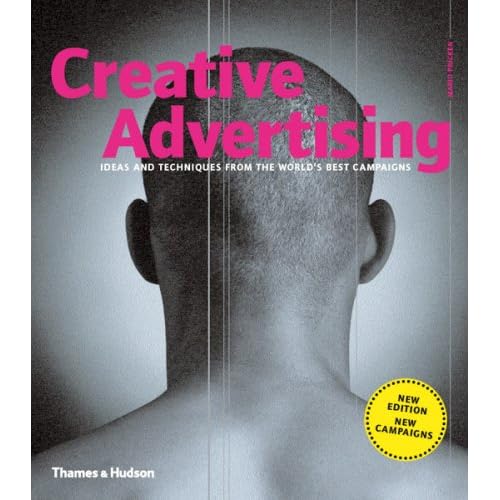
This is another one of those books that you can dip into and find inspiration every time. I have the 2004 edition, but I've just seen that they've released a 2008 edition with more up to date campaigns. It's a really great book for getting you thinking about why an advert works and what the elements of a successful campain are. I bought it for about £30 a few years ago, but it's on Amazon for £15 at the moment - an absolute steal! Well worth it.